

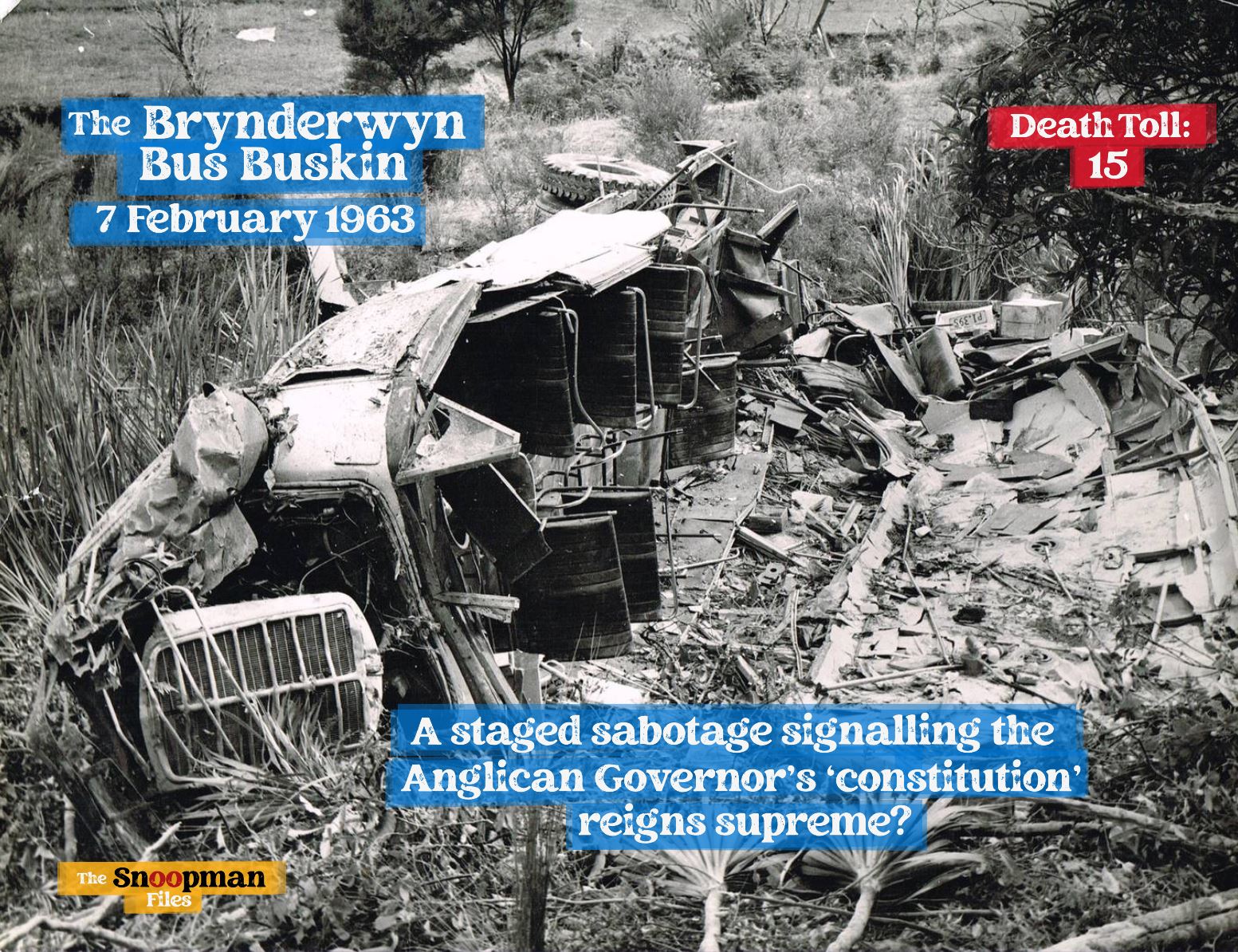

The Brynderwyn Bus Buskin, 7 February 1963 — Death Toll: 15
This Staged Disasters Down Under series reveals how New Zealand’s issues, scandals and crises are thematically encoded with historical riffs to signal authorship, unity, scapegoats and caution — while telegraphing hidden aims — in plain sight. New Zealand's staged crises occur with spooky precision timing to riff off historical events so that the newsmaking psycho-dramatic terror theater, simultaneously performs as cryptic signals intelligence, boasts its ritualized spectacular power and functions to maintain discipline among a cryptocracy.The key Māori language place encountered in this dispatch: Waitangi (pronounced Why-Tongue-e), wai, or water (pronounced Why), and tangi, or funeral (pronounced Tongue-e).Buskin denotes tragedy, especially: tragedy resembling that of ancient Greek drama. And also: a laced boot reaching halfway or more to the knee. And so, a bus tragedy followed commemorations, which involved marching soldiers wearing boots halfway to the knee at a place called Waitangi.
Overview:
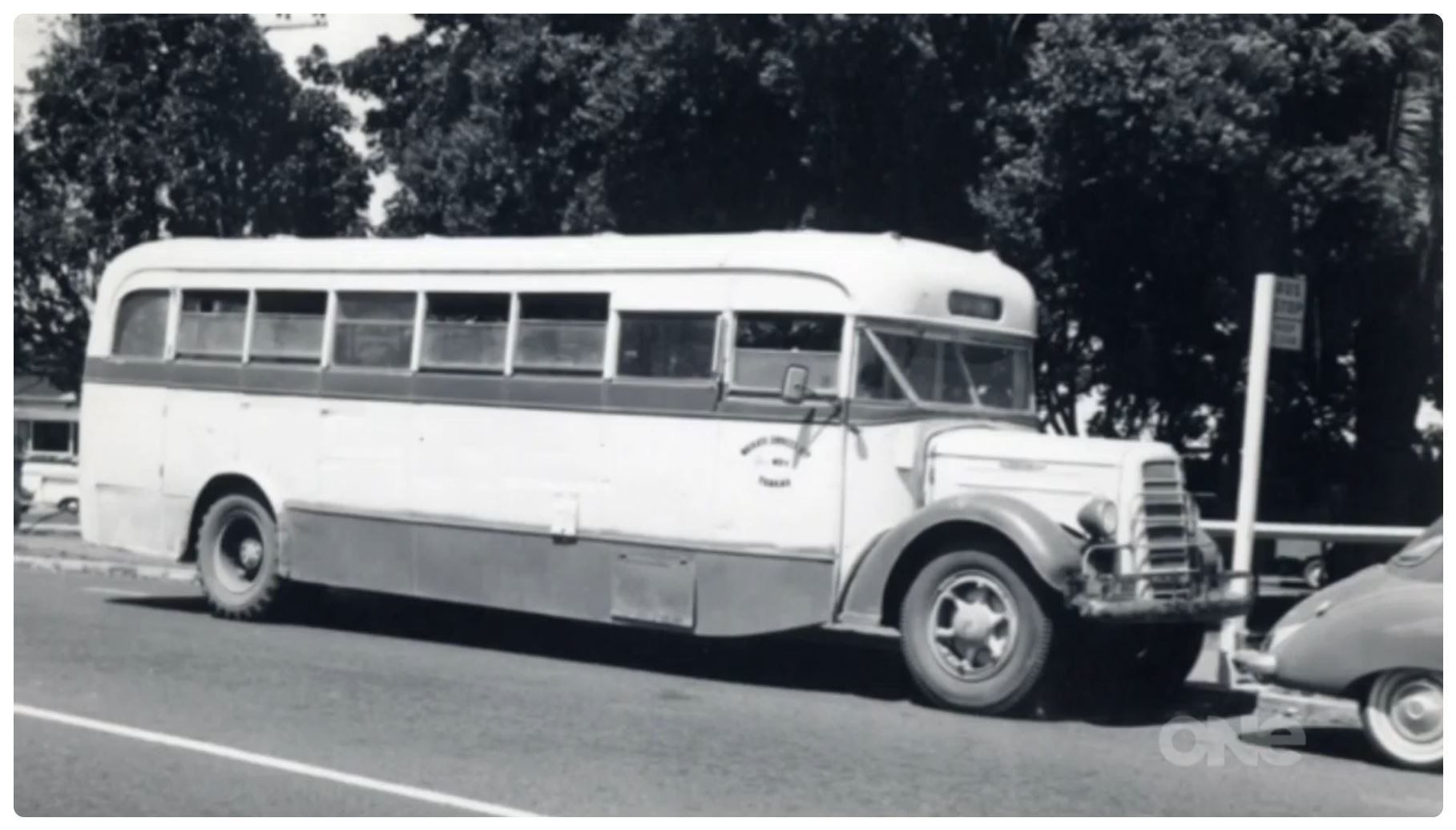
The Bryndweryn Bus Crash of 7 February 1963 is one of the least remembered ‘worst of type disasters’ since the Second World War. A bus carrying 35 passengers and the driver, was owned by Waikato Bus Services Ltd of Tuakau, at the foot of the Bombays.
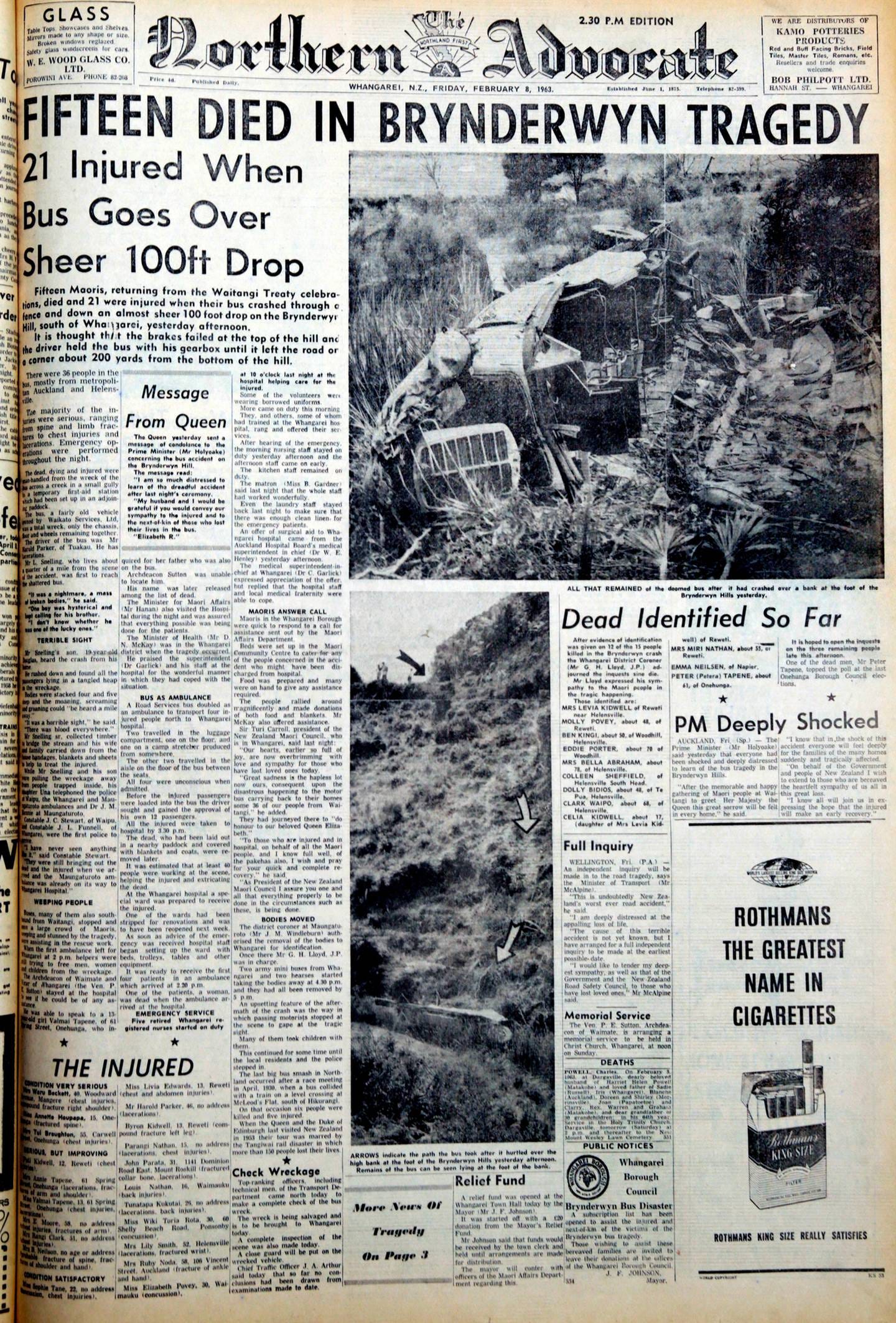
It was widely reported at the time that almost half of the cultural group of Māori who were travelling back from performing before the Queen and the Duke of Edinburgh on Waitangi Day, were killed when the bus careened over a bank and rolling 100 feet.
One of the enduring mysteries of the Bryndweryn Bus Tragedy, or Buskin, was why the rear brakes weren’t checked despite three services and two certificate of fitness checks in the four months leading up to the fateful day following a trip to Waitangi.
Former Māori Television news and current affairs editor Steve Snoopman presents the case that the Brynderwyn Bus Disaster was staged as a ritualized rite of revenge.
As with all of these staged disasters, their cover stories play on an apparent individual, institutional, or ideological ‘failure’, to identify and avoid pitfalls, blind spots, and common mistakes, that practically guarantee the odds of a catastrophic crisis.
These staged disasters play with the tactic of inversion, where naïveté is cultured into the gentile peasant monkeys, such that they plan for success without asking the critical counter-question: what would guarantee failure? Yet, initiates of secret orders also learn about inversions in metaphorical ceremonial stages, journeys, and trials with symbol-laden allegorical tales performed as rituals to achieved degrees of a craft.
As such, this dispatch explores the ‘Brynderwyn Bus Disaster’ as a novel Gladio staged terror event, as part of a series of ‘worst of type disasters’ inflicted upon New Zealanders, to shift the political center of gravity by embroiling state, district and city officials. Ergo, the public inquiries are performative theater and are part of the cover-ups, to deflect attention horizontally among the monkeys to cue arguments about blame, while never imagining the cause is a pyramidic cryptocracy inflicting novel Trojan Horse attacks. The mayhem-makers behind the ‘Brynderwyn Bus Accident’ gleefully overlayed their own cryptic cypher onto the Royal Tour with their symbol sorcery, by riffing off the historical moments with psychotic humour — to hack reality.
The supposition presented here is that following World War II, a kind of warfare was imported into New Zealand that was so novel in its nature, that neither its immigrant or native populations would suspect they were being subjected to a psychic-voodoo.
This novel covert, or clandestine, warfare has featured a general trend in increasing its techno-prowess, while the cryptocratic dark state network grew in size, sway and sophistication. But always, one characteristic remained a constant; a thematic riffing off historical events to signify a cryptographic disaster, where the worst types of tragedy out-do the previous ‘bests’ in natural disasters, or unintended human-made crises. Or, where a calamity is staged to look like an illness, a lone wolf or beyond N.Z.’s control.
This Staged Disasters Down Under series revisits: the Ballantynes’ Fire, 18 November 1947; Tangiwhai Disaster, 24 December 1953; Brynderwyn Bus Tragedy, 7 February 1963; Kaimai DC-3 Disaster, July 3 1963; and the Wahine Disaster, 10 April 1968.
This series of ‘worst types of disasters’, or the diabolical attempts to make them so, joins up with the Darkest Days by Dates Down Under series, starting with the Mount Erebus Disaster in 1979 and continues with the Wellington Sewerage Crisis of 2026.
Brazenly, ‘the news’ is weaponized as a vector conveying codified signals that the ‘incidents’ were staged. Date riffs are a key detectable sign communicating threats, cooperation, authorship, and to telegraph covert objectives, scapegoats and rewards.
Ergo, there lurks another layer to New Zealand’s recent past and the trail of meta-data reveals encrypted ‘glyphs’ or ‘runes’ of a network who ‘hex’ targets in terrible tricks.
Snoopman’s time travelling tale traces an epitome of evil most of his fellow monkeys might thunk could only happen in horror novels, grim stage plays or in epic noir flicks.
As such, this heretical dispatch teaches snoop-readers how to apply Sherlock Holmes or Agatha Christie logic to Nancy Drew or Scooby Doo enduring mysteries, current crimes and unfolding news events in order to spot-light the spooky darkness.
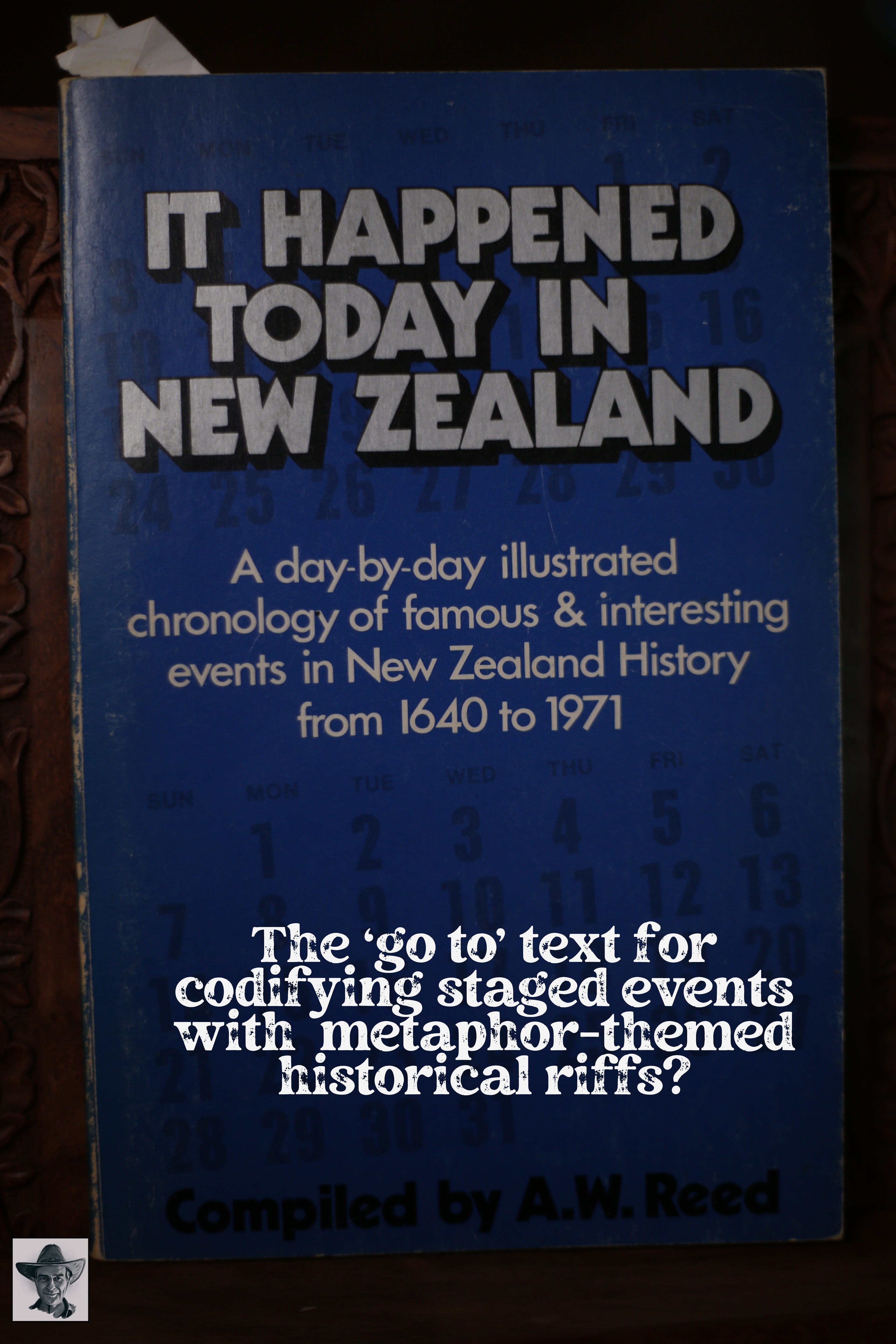
The gazetted notice for the Transport Department called the crash an "omnibus accident", which refers to a collision or incident involving a large public passenger vehicle, such as a bus, coach, or motorcoach. These accidents often result in significant injuries or fatalities due to the vehicle's size and weight, frequently involving multiple passengers and requiring complex insurance, liability, or legal claims, notes Haug Barron Law Group and MRH Injury Law.This ground-breaking series cites the NZ History website, administered by the Department of Internal Affairs, as well as A.W.Reed's 1973 compedium of significant events entitled, It Happened Today in New Zealand, and A.W. Reed's 1979 chronology, Two Hundred Years of New Zealand History. News headlines are reworked into collages, with graphical colouring-in by Snoopman. 
➳ The Brynderwyn Bus Buskin, 7 February 1963 — Death Toll: 15
Snapshot: The loss of a bus carrying 35 people from Waitangi on February 7 1963 was a staged catalytic event scripted to feature a ritualized rite of revenge, or utu, offering during the Royal Tour of 1963. This ritualized massacre killed 15 in a tumbling omnibus tragedy.On February 7 1963, a bus crashed while travelling south of Whangarei, over the Bryndweryn Hills, when its breaks failed, killing 15 passengers and injuring 21.
The horrific crash of the Waikato Bus Services coach shocked the country.
The 35 passengers were a kapa haka group who had travelled to Waitangi as part of a huge contingent of Māori to welcome the royals, Queen Elizabeth II and her husband, the Duke of Edinburgh, Prince Phillip, on a ‘landlady and landlord inspection visit’.
The annual commemoration at Waitangi runs for three days, climaxing on Febraury 6th, which is the historical day of the first signings of the Treaty of Waitangi. The British Crown has long asserted that the Māori chiefs signed away sovereignty. But, paper sovereignty was swindled by other peices of paper; the Treaty was theater.
The cultural performance group was in the care of Peter Tapene, an Onehunga Borough Councillor, who had focussed for 18 months to prepare their slot.
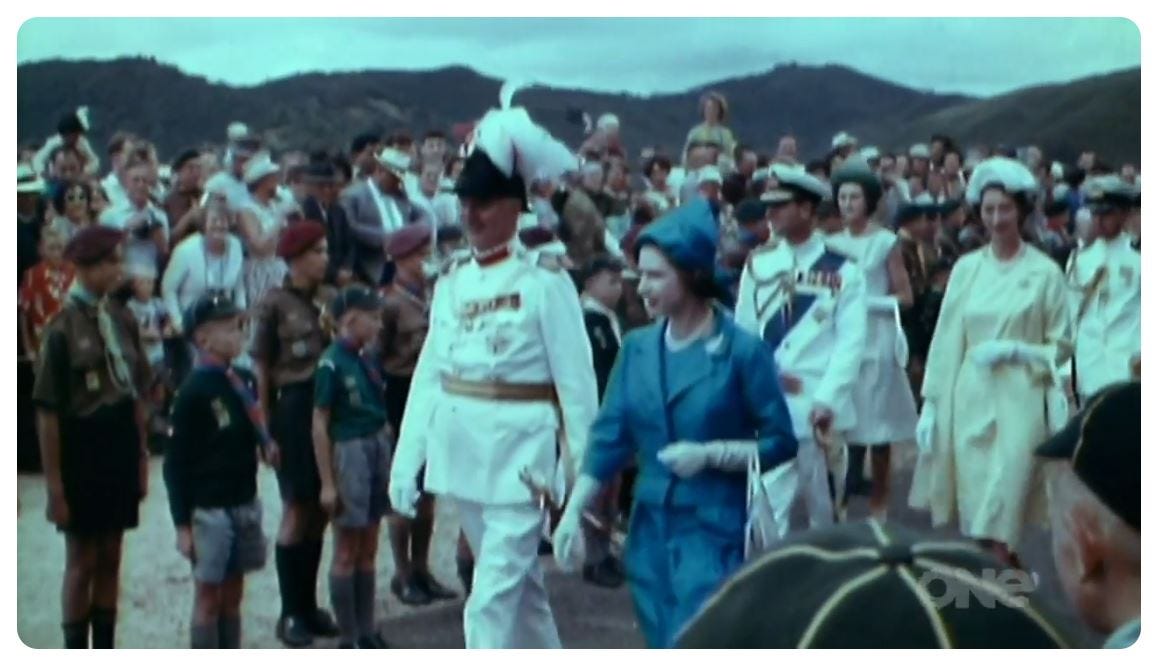
Almost 100 buses were booked by the Ministry of Maori Affairs, to transport various groups to Waitangi, for the annual commemoration of the 1840 Treaty signings.
Maori Affairs had contracted a Port Waikato company, Waikato Bus Services Limited, to supply its buses, as part of the broader fleet required. But, when the bus turned up at Helensville for Peter Tapene’s kapa haka group, it was an old noisy dillapidated bus and there was much concern about its fitness. Peter Tapene’s son, John, said his father got on the phone to complain because he had paid a deposit for a newer bus. The bus Mr Tapene had ordered had been allocated to another group at the last minute.
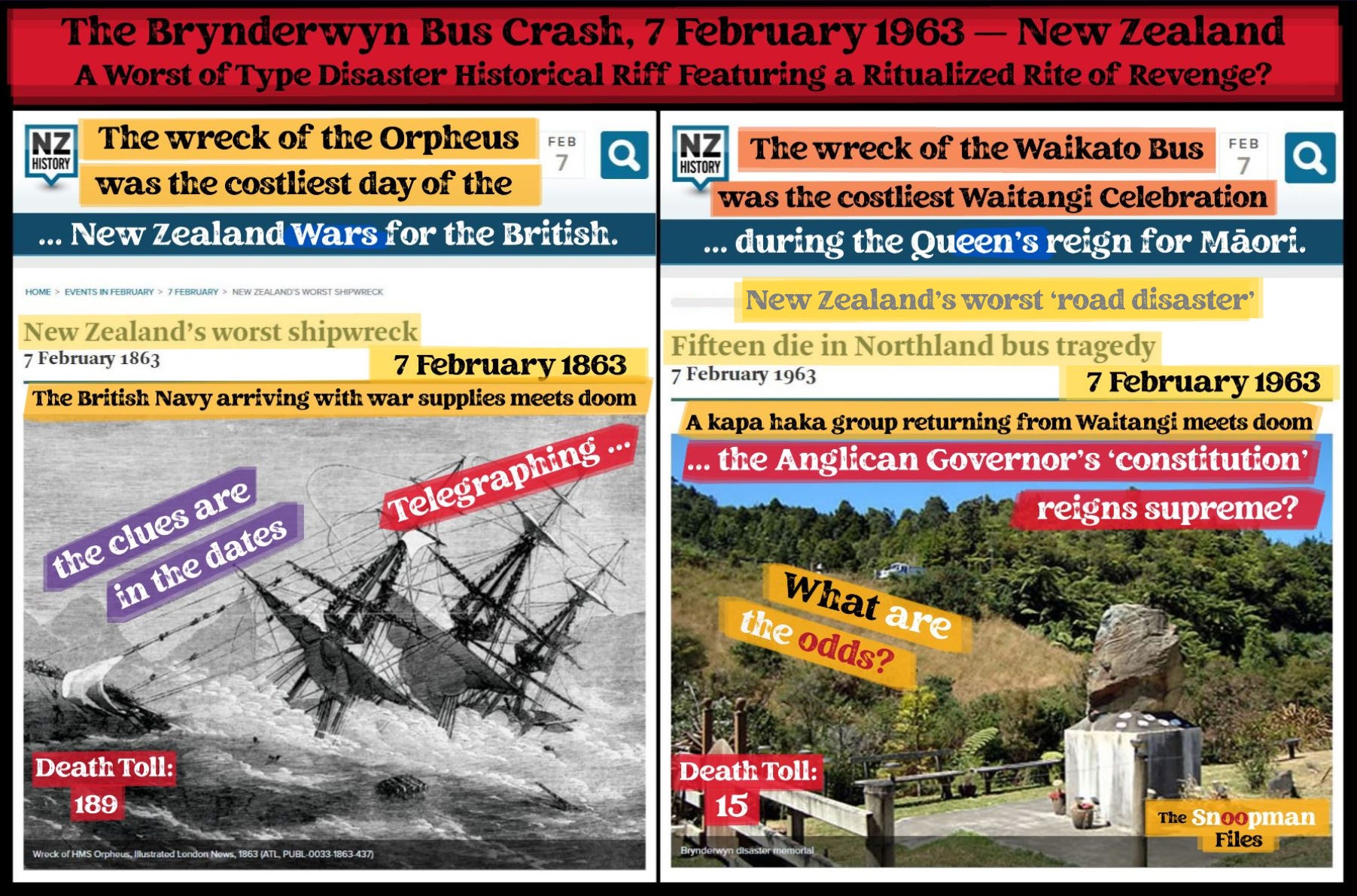
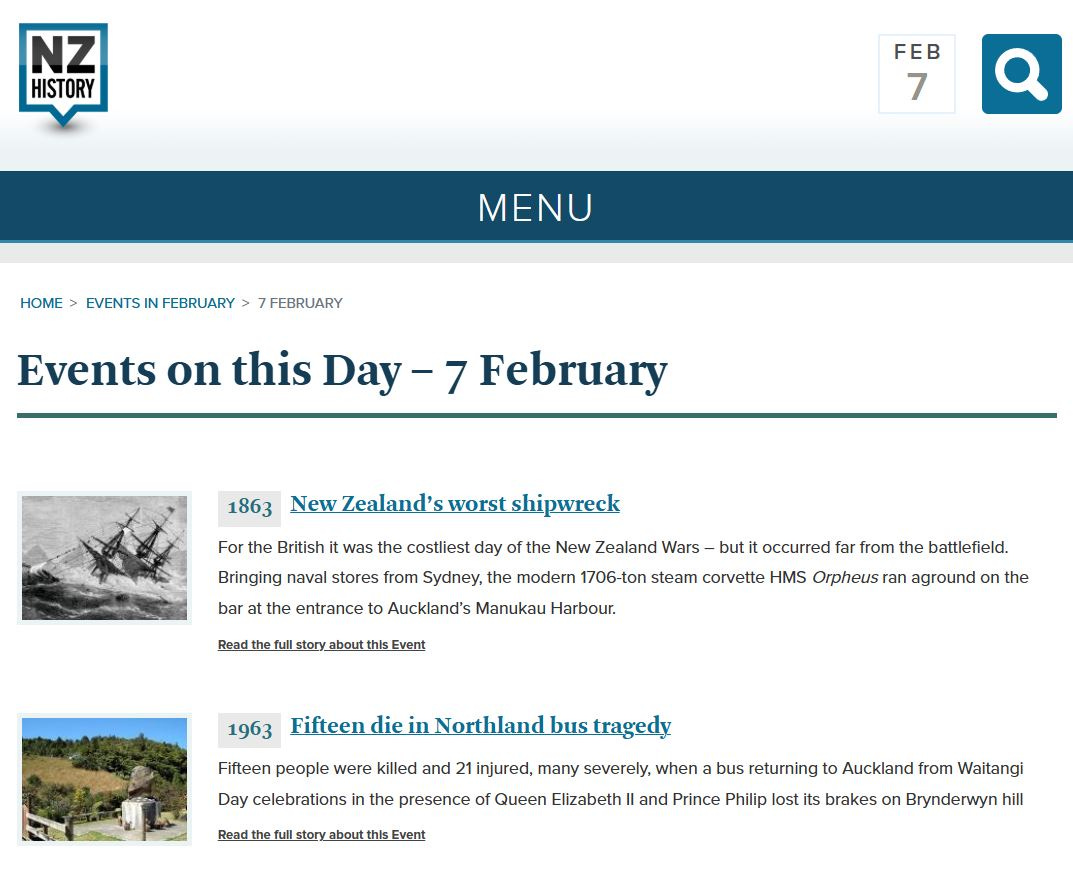
Since this heretical series re-examines ‘worst of type’ staged disasters, what are the odds that New Zealand’s worst bus buskin would occur on the same day that N.Z.’s worst shipwreck occurred, February 7 1863, when the HMS Orpheus sank, killing 189?
Especially, since the wreck of the Orpheus at the Manukau Harbour entrance was a set-back for the military plans of Governor George Grey, sincethe ship was transporting men in preparation for war with the Waikato tribes, who refused to sell coveted land.
Potently, the wreck of the Orpheus was the costliest day of the New Zealand Masonic Revolutionary War of 1860 to 1872 for the British. This maritime disaster was caused by errors and bad luck in heavy sea. Instead of rounding North Cape to reach Waitematā Harbour, Commodore William Burnett decided to berth at Onehunga in Manukau Harbour to save time. Unfortunately, his charts were outdated and the channel through the bar had moved. Lookouts on shore signalled a warning when they realised the ship was off course, but the Orpheus missed the message.
Ergo, at the last minute the newer bus was changed on the Maori cultural group, and Peter Tapene’s kapa haka group from the Kaipara District were on a trip to tragedy.
The date meta-data is the dead give-away of a revenge ritual, which demonstrated the cryptocracy’s vindictive will to symbolically gain scalps as a ‘ticket price’ from Māori.
As the Department of Internal Affairs’ NZ History website noted:
“The tragedy evoked painful memories of the Tangiwai rail disaster during a previous royal visit. It occurred 100 years to the day after New Zealand’s worst-ever shipwreck.”
The Tangiwai Rail Bridge No. 136 became an activated talisman in a new dark secret zeitgeist of techno-sorcery, that exploits places for their names, history, or symbolism.
How spooky that the bus tragedy would occur on the return journey from Waitangi given the place selected for a black operation was ‘Tangiwai’, which is an anagram of the place-name, ‘Waitangi’. Especially, since the Monarch became Queen on February 6 1952 when her father King George VI died. What are the odds that N.Z.’s worst road tragedy would occur on the 100th anniversary of the nation’s worst shipwreck? It’s almost as if a ‘ledger of deaths’ were kept and retributions in blood balanced the sides.
The bus company and the driver came under scrutiny at the subsequent inquiry.
Waikato Bus Services, which operated a small fleet of buses, was founded by Harold Parker, who invested profits from selling white bait at Port Waikato, his son said.
As the driver, Harold Parker, told the inquiry when he applied the “foot brake the pedal went straight to the floor”. He tried to changed from third to second gear, but failed. In an effort to get more leverage, he stood up to apply the hand brake. He said:
“I knew that if I did run the bus into the side of the bank, the top of the bus would splinter and the sides would fall away. I was conscious also of the steep drop on the other side. I knew I was nearly at the bottom of the hill and if I could make one more bend I would be on a straight road.” — Harold Parker, Driver and Owner of Waikato Bus Services Ltd
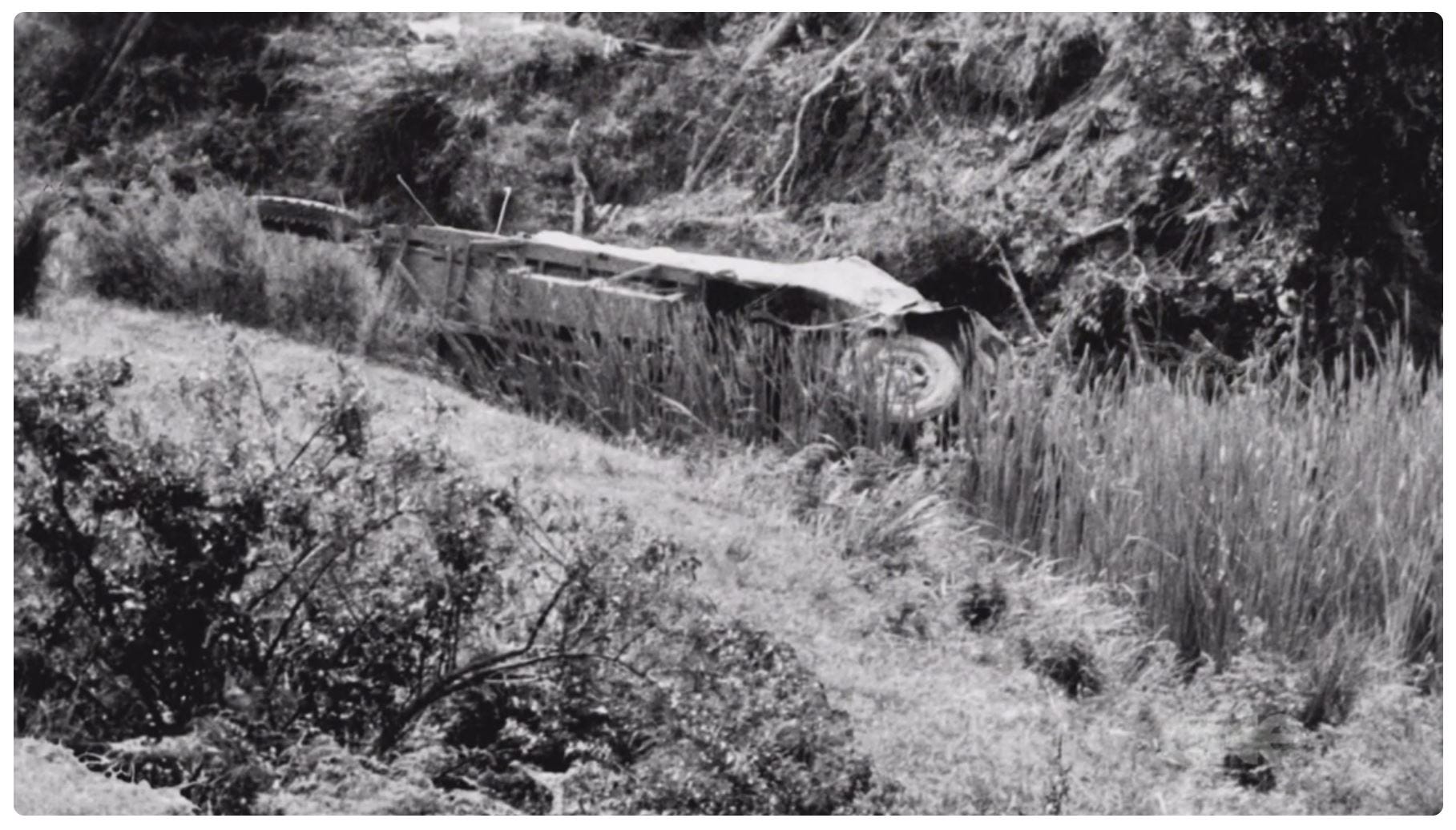
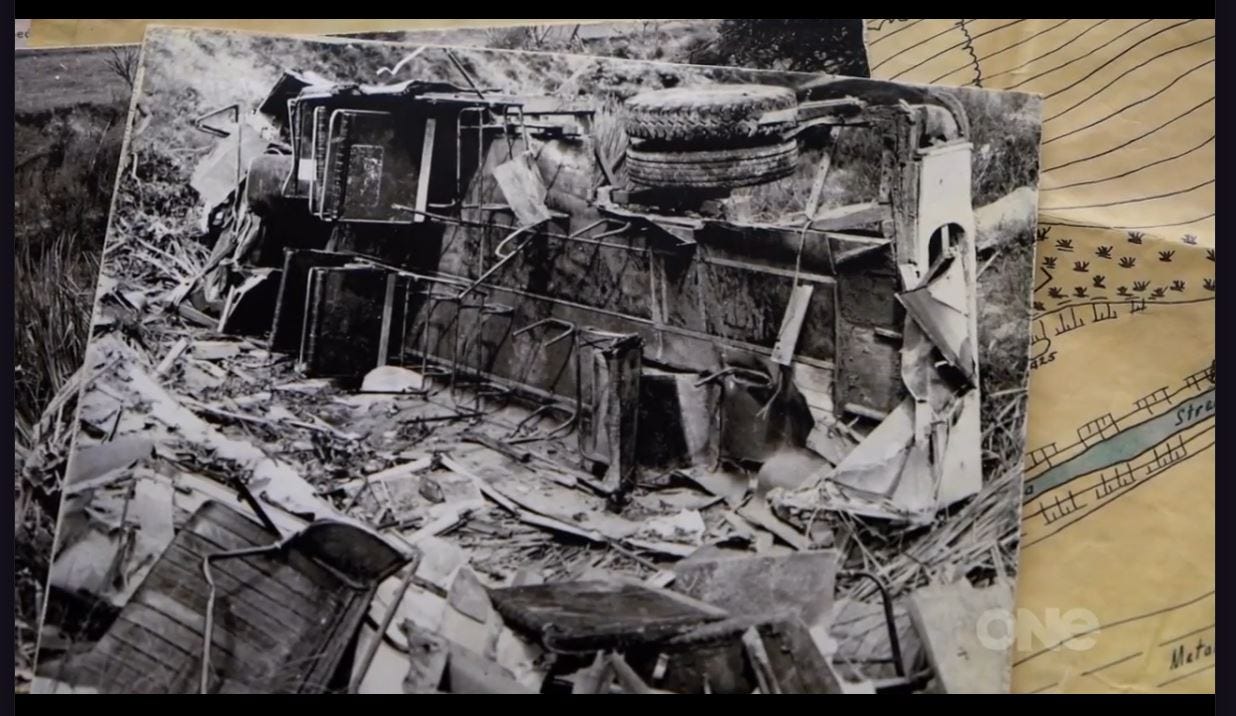
Parker tried to steer the bus down to the bottom of the hill and over the bridge at the bottom and ditch it on the rise on the way up. Parker nearly made it, but on the last corner the bus careened through a farm fence and flew over the sheer bank, past ferns and cabage trees, and rolling down the side on the hill to the bottom by the Pirua Stream, on to a farm owned by the Snelling family. Parker’s son said his father would never have taken shortcuts. However, the maintenance record of the bus tells a story of repeated warrant of fitness failures over the brake’s road worthiness.
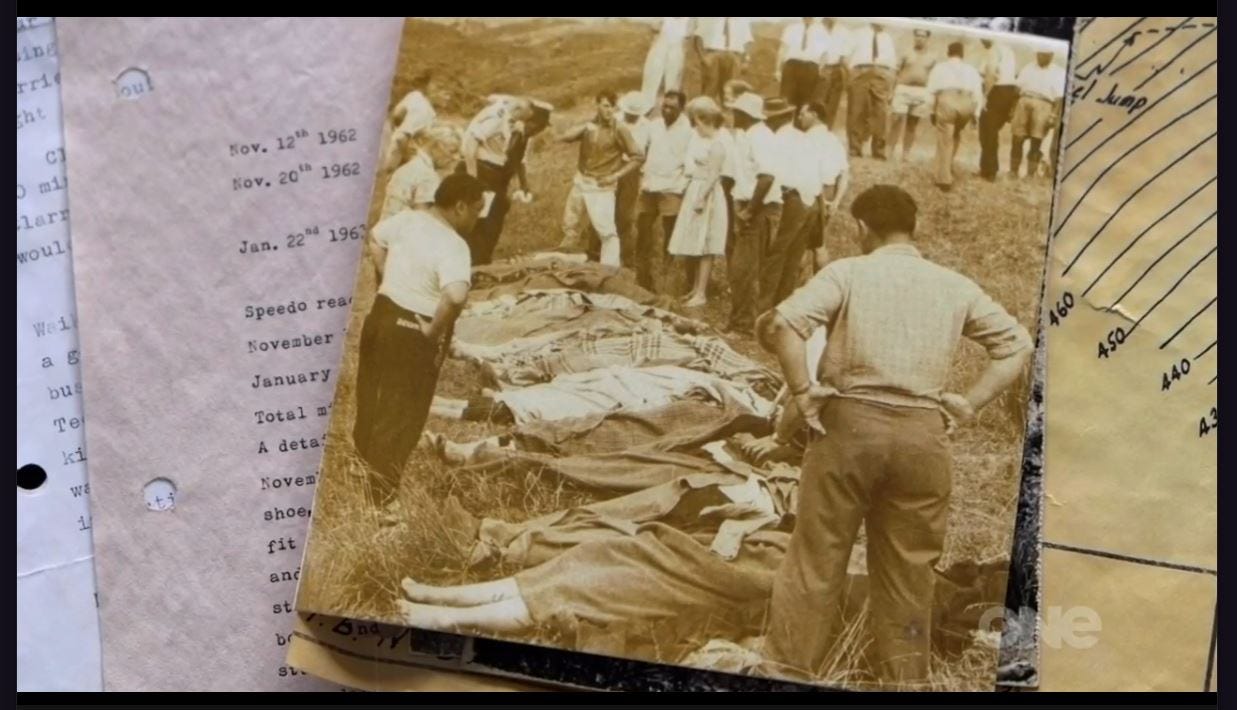
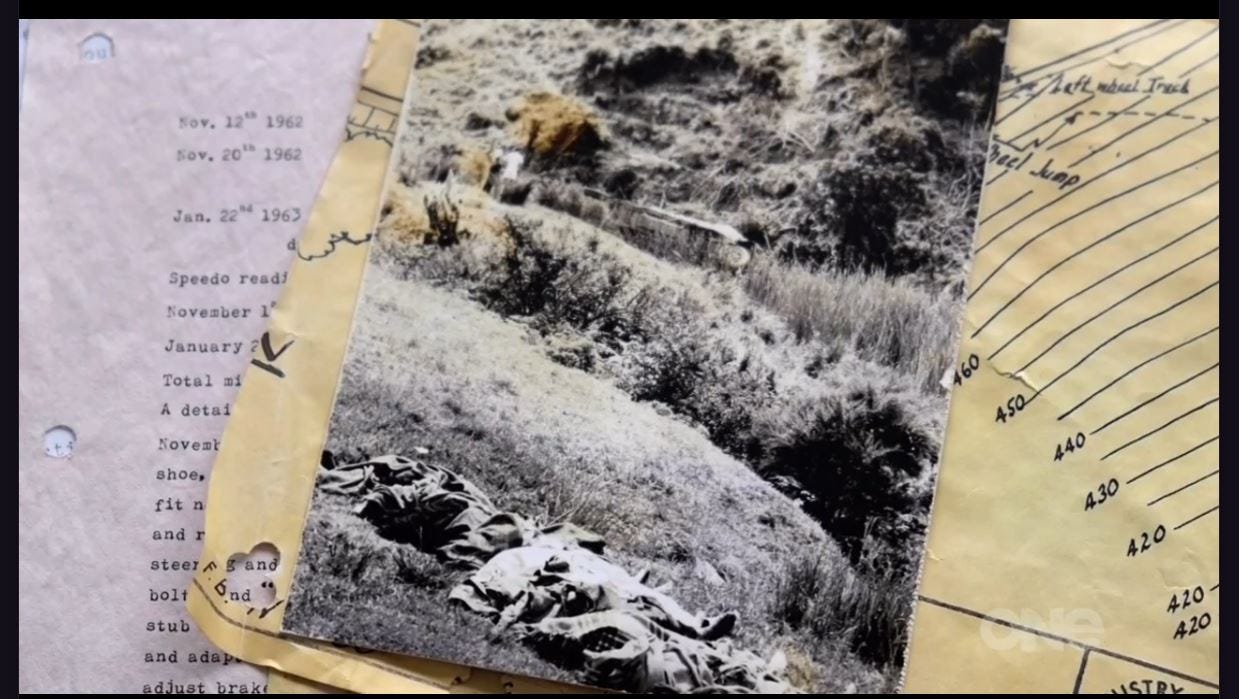
Almost four months before the crash, the bus was taken to a local garage to fix a brake problem. The front brakes were religned. The same month the bus failed the certificate of fitness. The bus was taken to another garage. The mechanic found there was a brake shoe out of position, despite this brake being ‘fixed’. And, when overhauling the kingpins, the mechanic workshop noticed the front brake wheel cylinder was leaking brake fluid, just days after the brakes were supposedly serviced.
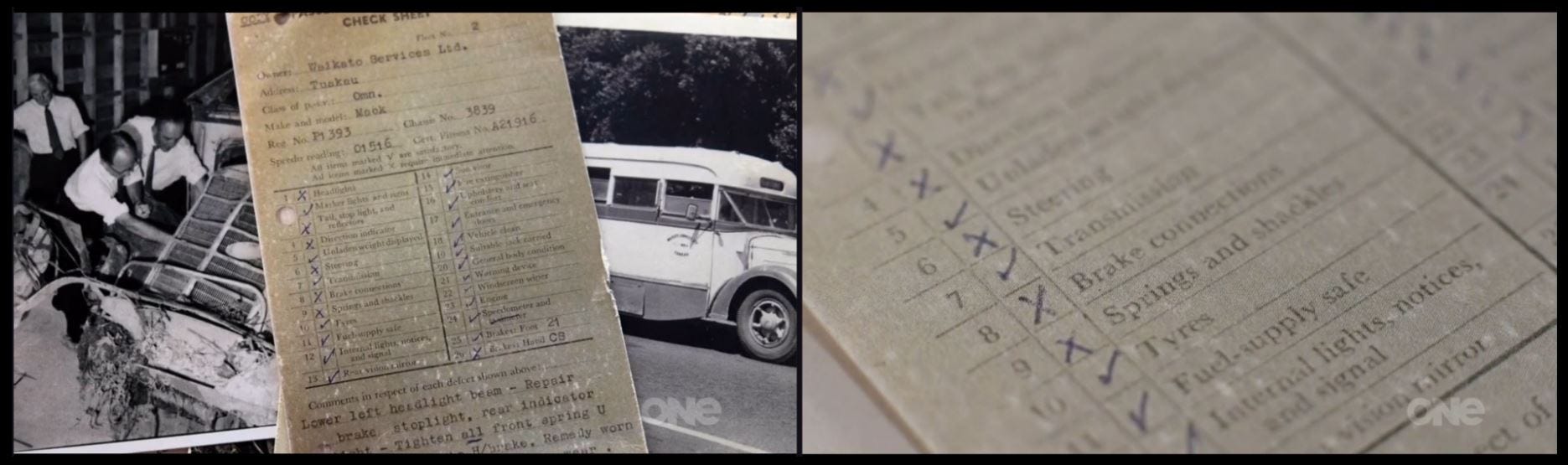
Worse, the back brakes were still not checked. Between these repairs, the brake cylinders were twice topped up with lubrication fluid. Veteran journalist Mark Sainsbury asked veteran mechanic Alan Runciman what these two top-ups indicated.
Runciman said it meant there were worn parts in the hydraulic lines, such as the wheel cylinders and brake cups or some part that had not been fitted correctly.
Runciman was adament the data in the Transport Department’s inquiry report and the check sheets pointed to a hydraulic leak somewhere in the break line system. He added, the mechanics should have found where that hydraulic lubricant was going.
The cryptocracy exploits individual, institutional and ideological vulnerabilities.
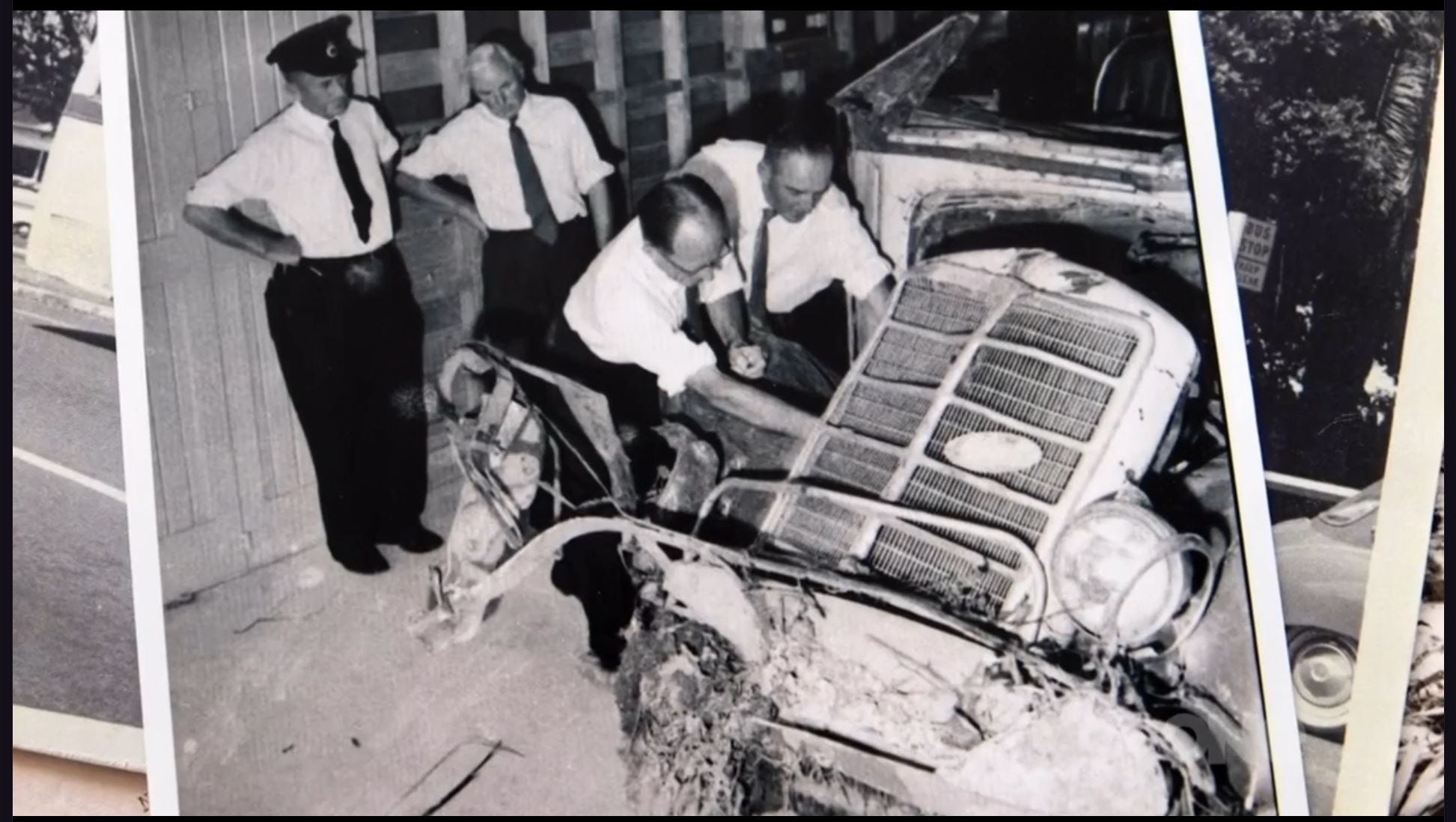
The Transport Department’s inquiry found the crash was caused by the complete failure of the service brakes. In particular, the Inquiry found a rubber seal in the right rear break had failed. This failure in the single line hydraulic break system, caused catastrophic consequences for the lives of 15 Māori, the distraught survivors and bereaved families, friends and folk of the Reweti Marae, and the Kaipara District.
With this focus, on the failed braking system of the coach, Transport Department inquiry led to new regulations mandating dual braking systems. The so-called ‘disaster’ resulted in significantly improved safety regulations, including mandatory dual braking systems for new buses and strict maintenance record-keeping.
Yet, while improvements were made, no one was officially charged, causing long-lasting grief among families who felt no proper justice was served. Moreover, the tragedy divided the community, families and led to long-term PTSD trauma.
Given that the Brynderwyn Bus Buskin of Febraury 7th 1963 is but one in a series of staged disasters inflicted by New Zealand’s emergent cryptocratic dark state, it is not surprising to find that their signature crytpic signalling present in the aftermath.
What are the odds that the decision of the inquiry into the bus that took flight off the State Highway 1 and rolled down bushy hill and breaking into pieces in a farm paddock, would land on the date February 20th 1963? On that very day, the first cross country flight took place when James William Humphreys Scotland flew a Caudron biplane from Invercargill to Gore, on February 20th 1914. The date signalled the inquiry would be controlled and the psycho-humour belied the cryptocracy’s hand.
And how uncanny that the gazetting of this decision occurred the following day, February 21 1963, given that on February 21 1853, the basis for a constitution of the Church of England in New Zealand was laid before a meeting in Wellington. Readers of Part 2 of Snoopman’s Staged Disasters Down Under series, entitled, “Tangiwai Railway Disaster, 24 December 1953 — Death Toll: 151”, will recall that the epic train crash on Christmas Eve was timed with a cruel ‘night-terrors theming’. The train tragedy riffed off the Church of England missionary, Samuel Marsden, who slept restlessly on Christmas Eve on December 24th 1814, ahead of performing the Christian service in New Zealand the following morning to the Bay of Islands Māori. Given the British Monarch is the Supreme Governor of the Church of England, the Queen’s first radio broadcast outside of Britain announcing the “most grievous train accident” at Tangiwai was essentially breaking world news to millions across Earth.
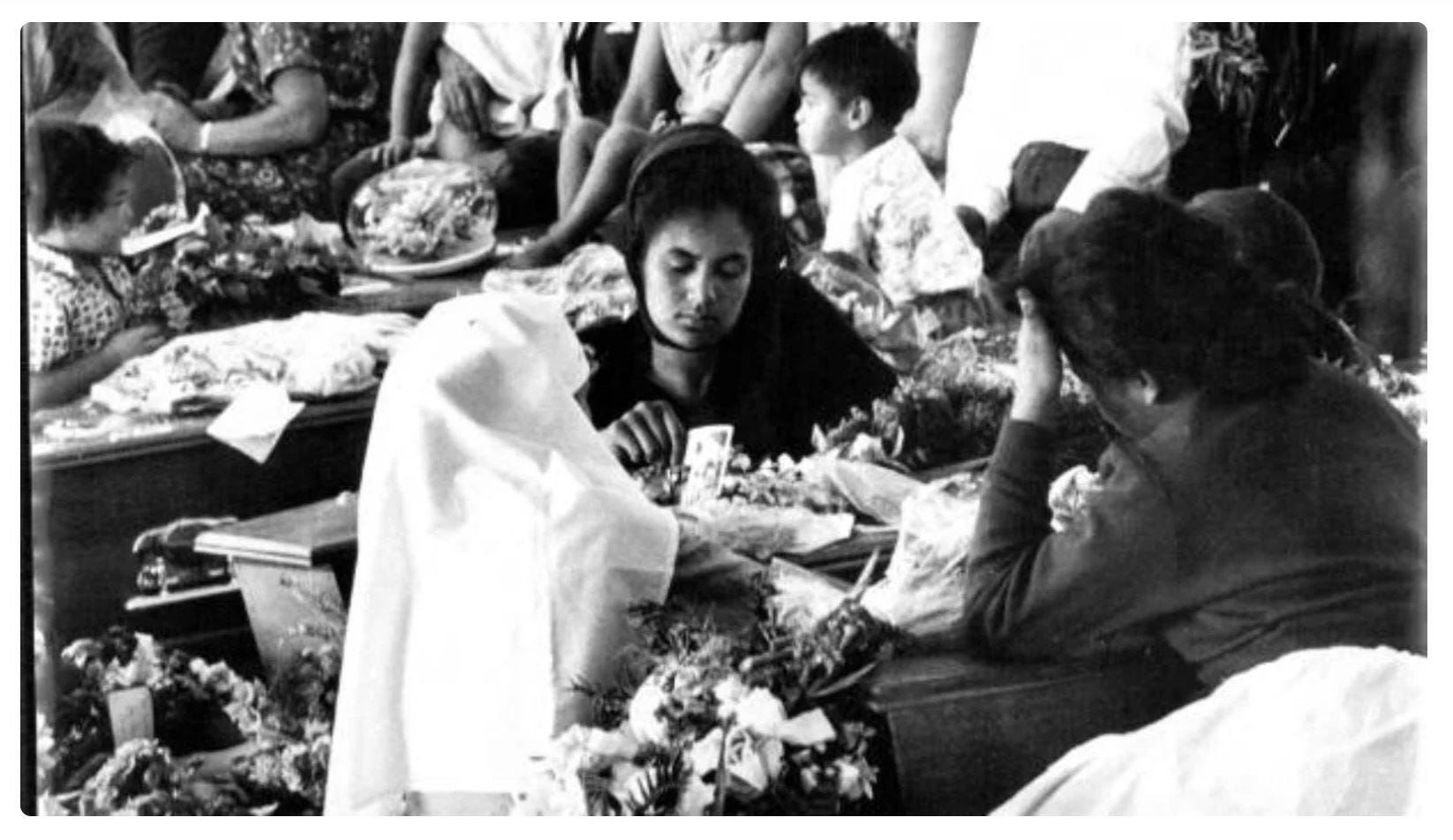
A tangi held three days after the crash at Reweti Marae near Waimauku, was attended by New Zealand Prime Minister Sir Keith Holyoake, a well-known Freemason.
The entwined families of the tight-nit community lost kaumatua and kuia who knew the local history, and who were teaching the language, stories, and song to the young.
Evidently, it was lost on the police that the bus may have been tampered with during a stop on the homeward journey. At Whangarei, Parker topped up the fuel and oil. And the bus also stopped on the Ruakaka flat, before heading south for Waipu and the Brynderwyns. And on the Auckland side of the peak of the Brynderwyns, Parker stopped the bus for a five minute breather on the Pilbrows Hill. The bus was built on the frame of a World War II-era Mack truck, and so its single breaking system was inappropriate for a passenger coach, especially for long-haul on hilly stretches.
Pirangi Nathan and his brother Louis survived the crash but they lost their grandmother, mother, sister and niece. John Tapene’s sister Valmer said her father Peter sat on an apple crate near the driver because the bus was so full. Once the bus was in trouble, Valmer recalled Peter tried to help the driver using the gear to try to slow the bus to make the corners as it picked up speed with the failed brakes.
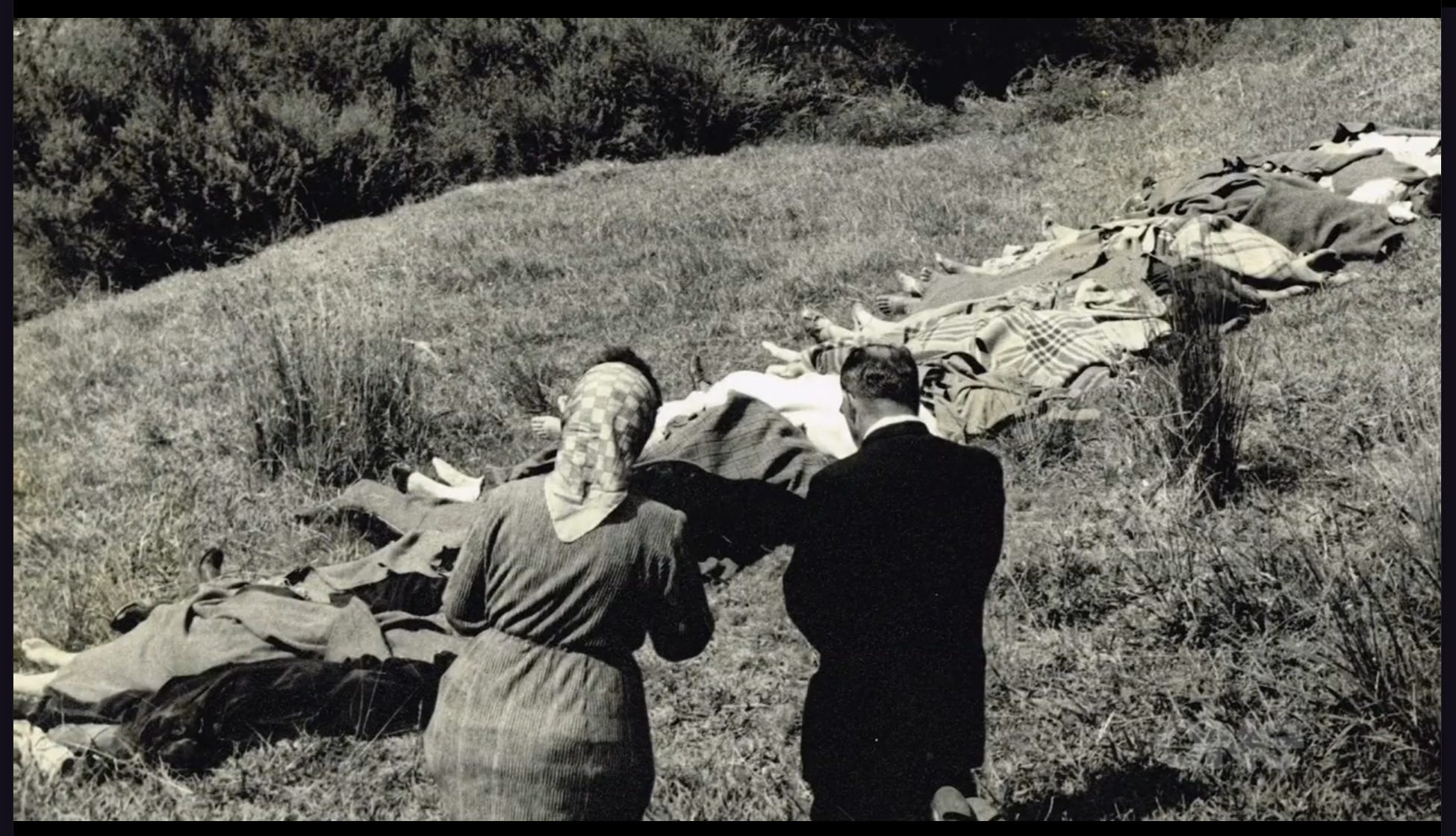
The noise of the bus tumbling down the hill alerted the farmer, Mr L Snelling. Snelling and his son Doug launched into helping survivors, while his daughter, Una, raised the alarm with police in Whangarei and Waipu, and with local ambulances and doctors by a dial-up analogue telephone on the old copper phone network.
Driver Harold Parker was in the acute care ward at Whangarei Hospital. Long after the bus crash, he attempted suicide a couple of times, his son Dave Parker said.
In this cruel plot, Harold Parker and Peter Tapene were played by the cryptocracy.
➳ Analysis and Conclusions to the Brynderwyn Bus Buskin
The metaphors laden into date meta-data reveals the New Zealand’s emergent crytpocratic dark state had hacked reality with another ‘worst of type disaster’.
This time, taking the form of a bus tragedy, or bus buskin; the gleeful psychopathic humour is hidden in plain sight, while its shadow lurks at large like a monster of myth.
It is worth repeating: the Department of Internal Affairs’ NZ History website noted,
“The tragedy evoked painful memories of the Tangiwai rail disaster during a previous royal visit. It occurred 100 years to the day after New Zealand’s worst-ever shipwreck.”
Where the wreck of the Orpheus resulted from a last minute decision by the captain who relied on outdated charts to sail to Onehunga instead of the Auckland Port, the Brynderwyn Bus Crash resulted from relying on an outdated bus that was swapped at the last minute on a kapa haka group whose leader had booked a new bus over a year prior. Ergo, time was weaponized to perform an metaphorical ritual with an inversion.
As a modus operandi, such historical riffing signals authorship, cooperation, caution and it telegraphs objectives. The signals indicate players are communicating their cooperation to take a plot ‘live’, convey hidden objectives, and to broadcast psychotic humour, thereby posting themselves like hostages — as applied game theory predicts.
In his “Darkest Days by Dates Down Under” series, Snoopman surveys the curious coincidences of calamities, catastrophes, or crises that jolted the nation while power, wealth and control were accumulated. In his disturbing multi-decade sketch, Snoopman traces the creepy trail of spooky minds, who he believes plot machinations with an eye on the past and a dark vision of the future. The circumstantial evidence reveals an awful picture of each new administration becoming embroiled in a cover-up of a staged event made to appear as an accident, a natural disaster, or a crisis caused by an unhinged man, or an ‘unsolved’ crime. The modus operandi of metaphor laden-historical riffing continues, because most monkeys suffer from symbol illiteracy.
Ergo, the criminal network that runs New Zealand from the shadows are signalling authorship, threats, promises, caution, and scapegoats as they telegraph their chess moves. Their gambit is that their power, influence and control over strategic resources— with the penetration of every major and significant institution — will continue and with impunity. This network runs in tandem with similar transnational clandestine operations across the world, destabilizing societies to inflict totalitarian tyranny.
In a recent ‘symposium’ hosted by a former banker, Catherine Austin-Fitts, of the Solari Report, and three academics — David Hughes, Lissa Johnson, and Daniel Broudy — presented a picture of a full spectrum dominance war, waged by the transnational deep state, whose objective is to enslave humanity via total control of territories, treasures and technologies. This symposium was also presented with the leading author on technocracy, Patrick Wood, whose book Technocracy Rising: The Trojan Horse of Globalization, laid out the origins and rise of a technocracy movement in the 1930s.
And, they sketched the tactics, technologies and the tricksters of technofeudalism.
They also made the case that a dystopian totalitarian technocratic system is being constructed before our very eyes, while technology upgrades get boosted amid periodic resets, and are actually the componentry of a global control grid designed to eventually fully integrate humans with biodigital nano-tech police surveillance states.
The present geopolitical tectonic shifts are an epic struggle between powerful factions competing to control the territories, treasures and technologies for dominance over the development of the computing chip. New Zealand has untapped minerals in the Conservation Estate, the coastal environs and under the seabeds.
Many shock news events are staged in this low-grade war of trauma programming, economic warfare and ritual terrorism fitting within a ‘strategy of tension’ paradigm to forge a police state. A police state describes a government that exercises power arbitrarily through the wielding of law enforcement against the citizenry, rather than upholding the Rule of Law Doctrine to restrain abuses of power. If unchecked, police state formation can manifest into a totalitarian state controlled by a politicized police force that secretly supervises the citizens’ activities, inflicts punishments and controls the captured citizenry through fear and tightly regulated hope, for sinister ends.
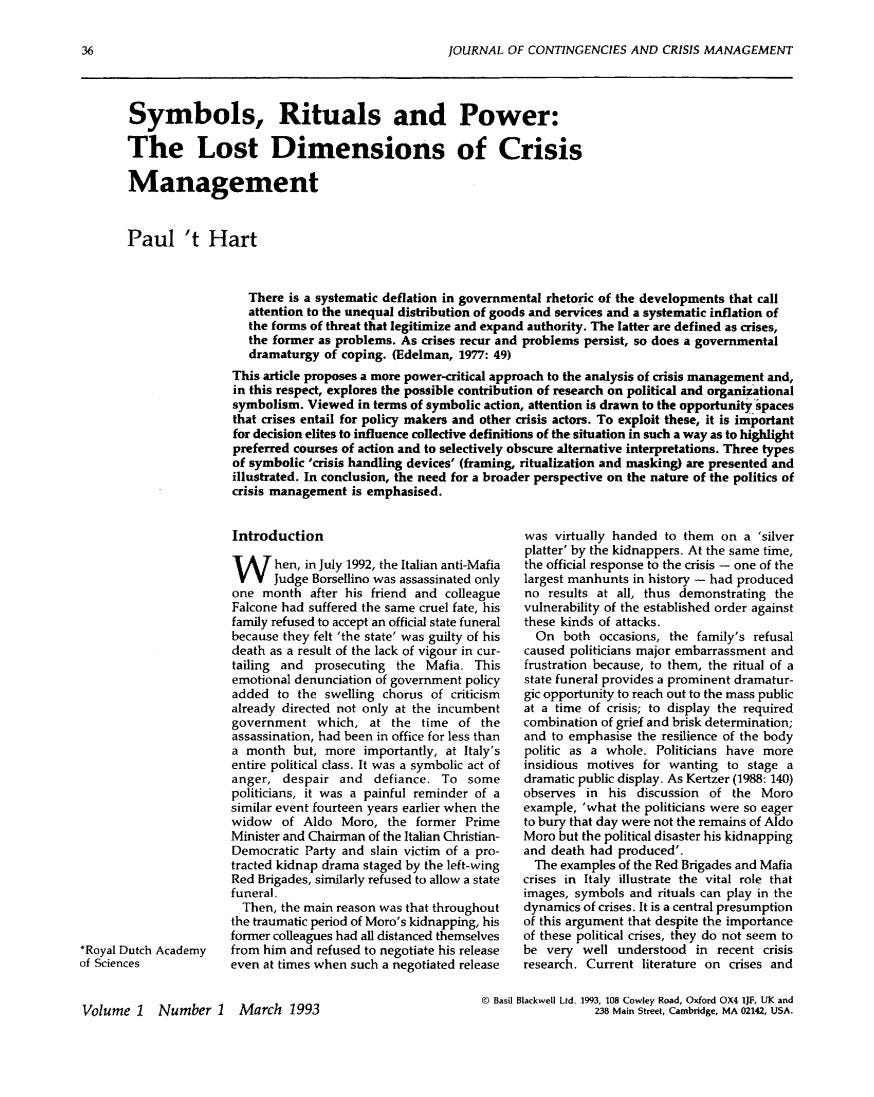
As crisis management expert Paul ’t Hart observed, crises can be contrived and manoeuvred by actors within and external to the state apparatus and provided they can control the ritualized symbolic actions, they can also constrain the meanings. In an atmosphere of calamity and urgency, those who control perceptions about what caused the crisis and what might resolve it, will tend to gain politically, wrote ’t Hart in his 1993 paper “Symbols, rituals and power: The lost dimensions of crisis management” and published in the Journal of Contingencies and Crisis Management.
Political actors, whether they work in government institutions or in private enterprises, have incentives to smooth over concerns during crises, either because they do not want to make them worse, or because they are acting collusively to set a course toward a climax, from which they expect to gain in its resolution. Powerful groups use the media to relay information to ‘crisis stakeholders’. Ergo, newsrooms become vectors for perception management in the absence of vigilant filtering.
By controlling the dates of crises inflicted upon public and private institutions, and across the country and over time, the network is performing ritualized displays of power. This spectacular exhibition enforces discipline among the network, as well as serving to manufacture the consent of the public, and state managers, and competing vested interest groups, to agree to the ‘desired solutions’ without necessarily being aware that a sinister, stealthy form of the ‘Shock Doctrine’ has been perpetrated.
This pattern hidden in plain sight isn’t merely coincidence, synchronicity, or chance.
Nor, can it be explained away by Oscillation Law, which describes the rhythm behind cosmically woven fabric of reality, as an infinite flow like a river and its crystalization, performing as ‘frozen forms’ holding shapes. Snoopman has cracked the cypher that lurks behind the headlines. A cryptocracy that rules New Zealand from the shadows hacks the national mind, tomb-raids cultural memory and hijacks our aspirations with broad daylight robberies and witching-hour hold-ups, staged to appear as banal endings due to illnesses of the infirmed, or as accidents, or occasionally, as murders blamed on a patsy, or as shootings by police acting ‘self-defensively’. These crises are codified calamities, and therefore they are ransom notes to the Establishment’s insiders.
So, the newswires spread the sewerage discharge story and the crisis is taken at face-value. Yet, the pattern reveals a sinister cryptocracy practising symbol sorcery.
The pertinent details and issues in the events, as they relate to the dates, unveils the thematic metaphors encoded into the timings to stage crises and produce headlines.
A key feature of propaganda is the mass production of a narrative that performs to a hymn sheet, whereby news anchors, reporters and publishing editors essentially sing from one script. Meanwhile, the omissions of key evidence hide the underlying goals.
And so, when a New Zealand crisis breaks on a historical date that thematically riffs off details of the crisis itself, you can bet all of the world’s debt the deep state network had scheduled precursor events to signal a looming staged event. And that cryptocracy’s professionals, officials and trademen have moved like synchronized swimmers as an army of ‘soldiers’, to make a crisis scenario ‘go live’ on the specified date. And, that others may have performed roles as unwitting assets or agents.
This isn’t to say that the news media are ‘all in’ on the rort. Most would be appalled.
Brazen lies spread quicker than the naked truth has the chance to stick on underwear.
You don’t have to be a detective to know that if you leave a criminal group at large, they will go on to scheme bigger plots, as any smart seven year-old fan of Scooby Doo could readily tell you. But, the country lacked a van of vacationing students with a dog to sniff the trail for clues of a criminal network staging disasters, managing the cover-ups and capitalizing on the desired solutions amid the group processing of the nation.
Key Findings: As a form of staged industrial sabotage, the Brynderwyn Bus Crash was inflicted to complete a trifecta of the psycho-dramas associated with the British Monarchy, commencing with the Ballantynes’ Fire a few days before the Royal Wedding in 1947, and carried on with the ‘Tangiwai Disaster’ during the Coronation Tour of 1953 and 1954. The Brynderwyn Bus Buskin was also staged as a form of transport terrorism targetting the Establishment as a reminder of the ‘blood and treasure’ expended to consolidate control during the New Zealand Wars. The bus tragedy cryptically communicated the ‘correct place’ of Māori was to supply obedient labour to serve the Empire. And for Māori to perform as ceremonial characters to make the Monarchy look benevolent, while Britain and America regularly asserted imperial violence to maintain and gain corporate access to resources that other native peoples sought control over, and became obstacles requiring geopolitical chess plays.
Where the wreck of the Orpheus was the costliest day of the ‘New Zealand Wars’ for the British, the wreck of Waikato Bus Services’ coach was the costliest Waitangi Celebration during the Queen’s reign for Māori. Once ‘the Waikatos’ were defeated in the Waikato War of 1863 to 1864, the political center of gravity for ‘the natives’ had shifted, such that the defeat of North Island Māori in the New Zealand Masonic Revolutionary War of 1860 to 1872 became an inevitability. And so, the wreck of the ‘Brynderwyn Bus’ was inflicted symbolicially as a ‘rite of revenge ritual’ not only to settle a score. And, also to telegraph a display of institutional power, with the capacity to penetrate institutions across the land and to compromise officials in cover-ups.
The Brynderwyn Bus ‘Accident’ telegraphed the Anglican Governor’s ‘constitution’ would reign supreme in the cryptocracy’s secret war featuring Trojan horse attacks.
The Brynderwyn Bus Buskin remains the worst road crash in New Zealand’s history.

This dispatch was originally posted on The Snoopman Files (February 7 2026).

Back when Steve Snoopman was ‘Snoopboy’, he delivered the Auckland Star during the dark days of the Reagan White House. He forged his superpower to ‘Thunk Evil Without Being Evil’ while writing a thesis on the Global Financial Crisis. Upon quipping Batman had failed to bust any Gotham bankers’ balls, since his ass is owned by DC Comics, he realised New Zealand needed a Snoopman.
Editor’s Note: If we have made any errors, please contact Steve Snoopman with your counter-evidence. Or, if you wish to share information related to these dispatches, by email, also briefly state the topic in the subject line, using relevant noun words, so that your email is searchable for following up later. For example, if it’s revealing how the suppressed police investigation into the Mount Erebus Crash happened, perhaps make the subject line: Erebus Police Coverup. Three to five (pro)nouns work well.
e: snoopman72@proton.me
SEE related: Darkest Days by Dates Down Under series introduction
Moving a Mountain — The Crash of Flight TE901: November 28 1979
Darkest Days by Dates Down Under: Part 1 [The Snoopman Files]
The Great Divide — 1981 Springbok Rugby Tour, New Zealand
Darkest Days by Dates Down Under: Part 2 [The Snoopman Files]
Transport Themed Terrorism — Wellington Trades Hall Bombing, March 27 1984
Darkest Days by Dates Down Under: Part 3 [The Snoopman Files]
Kiwi Dollar Weaponized as Ransom Notes — ‘Bastille Day’ Currency Crisis, 1984 Darkest Days by Dates Down Under: Part 4 [The Snoopman Files]
Accommodating France — Rainbow Warrior Bombing, 10 July 1985
Darkest Days by Dates Down Under: Part 5 [The Snoopman Files]
The Russians are Coming! The Mikhail Lermontov Sinking, 16 February 1986 Darkest Days by Dates Down Under: Part 6 [The Snoopman Files]
Ballantynes’ Fire, 18 November 1947 — Death Toll: 41 Staged Disasters Down Under: Part 1 [The Snoopman Files]
Tangiwai Railway Disaster, 24 December 1953 — Death Toll: 151 Staged Disasters Down Under: Part 2 [The Snoopman Files]
“Terror Archipelago Down Under? Pt 1 Industrial Sabotage, Ritual Terrorism, and Police State Formation in New Zealand” [The Snoopman Files]
“Into the Erebus Abyss — Air New Zealand Flight TE901 Rabbit Hole Redux” “Terror Archipelago Down Under?” Part 2 [The Snoopman Files]